
In case you missed it, there's a good report in today's PostPartisan
(Washington Post on line) calling attention to a number of issues where
Republican positions cause problems for the military. Here is a link to the Post article. The article itself has a link to to an article by Heather Hurlburt in Democracy Arsenal.
Hurlburt lists five issue: 1. Law of the Sea (I worked on this treaty
thirty years ago - the Navy has always supported it); 2.
Alternative energy; 3. Who jails terror suspects (professional military
officers don't want to be jailers); 4. Iran (not a war the military
wants); 5. Pentagon Budget (GOP wants some weapons the pentagon doesn't
want).
I can think of other issues - GOP cares nothing for the troops, but a lot for contractors, for example.
As Memorial Day approaches, we should focus on the troops.
Thursday, May 24, 2012

PTSD Film
Good article today in the Washington Post about a restored John Huston documentary about "shell shock" and its treatment in World War II.
We now call it PTSD and no longer consider it a psychoneurotic condition. In former times, senior officers (e.g. Patton) considered it "malingering" or worse. During World War I, British officers had more than three hundred soldiers shot for what may have been PTSD. Here is an account (possibly slanted) of how it came about that 306 British and Commonwealth soldiers were shot during that conflict.
PTSD and its effect on the lives of those suffering from it is certainly one of the cruelest consequences of war.
We now call it PTSD and no longer consider it a psychoneurotic condition. In former times, senior officers (e.g. Patton) considered it "malingering" or worse. During World War I, British officers had more than three hundred soldiers shot for what may have been PTSD. Here is an account (possibly slanted) of how it came about that 306 British and Commonwealth soldiers were shot during that conflict.
PTSD and its effect on the lives of those suffering from it is certainly one of the cruelest consequences of war.
Wednesday, May 23, 2012
On Being Ready For War
A year and a half after we invaded Iraq, Secretary of Defense Rumsfeld was asked by a soldier why troops have to poke through dumpsters to find parts for their equipment. "We go to war with the army we have, not the army we wish we had," Rumsfeld replied.
Six months after the Japanese attacked Pearl Harbor, the US Navy with a force of seven aircraft carriers against a Japanese fleet of ten carriers, had halted the Japanese advance toward Australia, bombed Tokyo, attacked the Gilberts, the Marshalls, Marcus Island, Tulagi, Lae and Salamaua and sunk five Japanese carriers. In doing this, the Army and Navy used the forces they started with. The US lost one carrier at Coral Sea and another at Midway.
A year later, the US Navy had added seven new carriers to the force (though they lost two carriers in the Solomons), replaced the obsolescent Douglas Devastator torpedo planes with the much more powerful TBF Avenger, fixed the troubling problems with the Mark 14 torpedo, replaced the Grumman Wildcat with the Grumman Hellcat, kicked Japan off of Guadalcanal and sank another Japanese carrier.
In the meantime, the navy had developed a proximity fused projectile for its 5"/38 caliber guns, shooting down the first Japanese aircraft in January 1943. For the rest of the war, we continued making improvements in equipment, training and organization.
Did we have deficiencies at the beginning of the war? You bet!
But our forces were ready to do what needed to be done.
It took them three years and eight months to win that war.
Some say the United States wasn't ready for war in 1941.
Balderdash!
Six months after the Japanese attacked Pearl Harbor, the US Navy with a force of seven aircraft carriers against a Japanese fleet of ten carriers, had halted the Japanese advance toward Australia, bombed Tokyo, attacked the Gilberts, the Marshalls, Marcus Island, Tulagi, Lae and Salamaua and sunk five Japanese carriers. In doing this, the Army and Navy used the forces they started with. The US lost one carrier at Coral Sea and another at Midway.
A year later, the US Navy had added seven new carriers to the force (though they lost two carriers in the Solomons), replaced the obsolescent Douglas Devastator torpedo planes with the much more powerful TBF Avenger, fixed the troubling problems with the Mark 14 torpedo, replaced the Grumman Wildcat with the Grumman Hellcat, kicked Japan off of Guadalcanal and sank another Japanese carrier.
In the meantime, the navy had developed a proximity fused projectile for its 5"/38 caliber guns, shooting down the first Japanese aircraft in January 1943. For the rest of the war, we continued making improvements in equipment, training and organization.
Did we have deficiencies at the beginning of the war? You bet!
But our forces were ready to do what needed to be done.
It took them three years and eight months to win that war.
Some say the United States wasn't ready for war in 1941.
Balderdash!
Tuesday, May 22, 2012
70 Years Ago Today: USS Saratoga (CV-3)
May 22, 1942: USS Saratoga leaves Bremerton Naval Shipyard in Puget Sound enroute to San Diego. Saratoga had undergone repairs for damage January 11, 1942 about 500 miles south of Oahu from a torpedo fired by Japanese submarine I-6. She underwent temporary repairs at Pearl Harbor, then proceeded to Puget Sound for repairs.
Her silhouette has been changed by removal of four twin 8" turrets, replacing them with twin 5"/38 mounts. She finally received the wider forward flight deck and the lengthened after flight deck first envisaged as early as 1936 and earlier provided to uss Lexington. A British-style open bridge was built atop the flag plot. The tripod foremast was replaced by pole mast. The distinctive tall stack was also lowered and she received a pair of Mk-37 5" directors (for the 5"/38 guns), with Mk-4 radars, and a secondary air search radar (SC) at the after end of the stack.
These modifications, as well as anti-torpedo blisters below the water line, greatly improved Saratoga's readiness for combat in the Pacific.
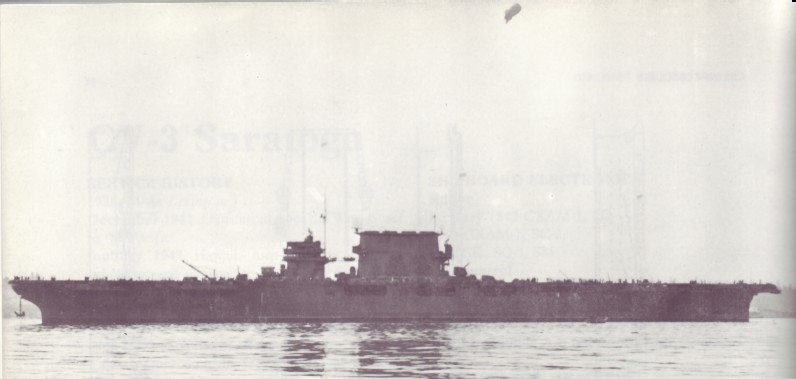
Her silhouette has been changed by removal of four twin 8" turrets, replacing them with twin 5"/38 mounts. She finally received the wider forward flight deck and the lengthened after flight deck first envisaged as early as 1936 and earlier provided to uss Lexington. A British-style open bridge was built atop the flag plot. The tripod foremast was replaced by pole mast. The distinctive tall stack was also lowered and she received a pair of Mk-37 5" directors (for the 5"/38 guns), with Mk-4 radars, and a secondary air search radar (SC) at the after end of the stack.
These modifications, as well as anti-torpedo blisters below the water line, greatly improved Saratoga's readiness for combat in the Pacific.
Monday, May 21, 2012
A Commencement Address
Robert Reich, President Clinton's secretary of labor and currently a professor at Berkeley, has posted a commencement address. He titled it "the commencement address that won't be given." After you read it, you'll know why. [The following is censored. Be sure to read the original.]
He uses blunt language to describe the hurdles facing this years' college graduates:
1. Jobs - "you’re going to have a hell of a hard time finding a job. The job market you’re heading into is still bad. Fewer than half of the graduates from last year’s class have as yet found full-time jobs. Most are still looking"
2. Salary - "But even when you get a job, it’s likely to pay peanuts.
Last year’s young college graduates lucky enough to land jobs had an average hourly wage of only $16.81, according to a new study by the Economic Policy Institute. That’s about $35,000 a year – lower than the yearly earnings of young college graduates in 2007"
3. Career prospects - "But this parchment isn’t as valuable as it once was. So much of what was once considered “knowledge work” – the kind that college graduates specialize in – can now be done more cheaply by software. Or by workers with college degrees in India or East Asia, linked up by Internet."
4. Debt - "In a few moments, when you march out of here, those of you who have taken out college loans will owe more than $25,000 on average. Last year, ten percent of college grads with loans owed more than $54,000."
5. Future - "If unemployment stays high for many years, if the wages of young college grads continue to fall, if the costs of college continue to rise and state and local spending per college student continues to drop, and if the college debt burden therefore continues to explode – well, you do the math."
He offers some thoughts we should all consider: "You see, a college education isn’t just a private investment. It’s also a public good. This nation can’t be competitive globally, nor can we have a vibrant and responsible democracy, without a large number of well-educated people."
Reich is absolutely right, and that is the main reason it isn't good for my blood pressure when I hear the clever fools running legislatures in many states (including our own) talk as though it is only the students who are "customers" of education.
Balderdash!
To quote a former presidential candidate: "If you think education is expensive,try the cost of ignorance!"
He uses blunt language to describe the hurdles facing this years' college graduates:
1. Jobs - "you’re going to have a hell of a hard time finding a job. The job market you’re heading into is still bad. Fewer than half of the graduates from last year’s class have as yet found full-time jobs. Most are still looking"
2. Salary - "But even when you get a job, it’s likely to pay peanuts.
Last year’s young college graduates lucky enough to land jobs had an average hourly wage of only $16.81, according to a new study by the Economic Policy Institute. That’s about $35,000 a year – lower than the yearly earnings of young college graduates in 2007"
3. Career prospects - "But this parchment isn’t as valuable as it once was. So much of what was once considered “knowledge work” – the kind that college graduates specialize in – can now be done more cheaply by software. Or by workers with college degrees in India or East Asia, linked up by Internet."
4. Debt - "In a few moments, when you march out of here, those of you who have taken out college loans will owe more than $25,000 on average. Last year, ten percent of college grads with loans owed more than $54,000."
5. Future - "If unemployment stays high for many years, if the wages of young college grads continue to fall, if the costs of college continue to rise and state and local spending per college student continues to drop, and if the college debt burden therefore continues to explode – well, you do the math."
He offers some thoughts we should all consider: "You see, a college education isn’t just a private investment. It’s also a public good. This nation can’t be competitive globally, nor can we have a vibrant and responsible democracy, without a large number of well-educated people."
Reich is absolutely right, and that is the main reason it isn't good for my blood pressure when I hear the clever fools running legislatures in many states (including our own) talk as though it is only the students who are "customers" of education.
Balderdash!
To quote a former presidential candidate: "If you think education is expensive,try the cost of ignorance!"
On Labor And Capital
"Labour is prior to, and independent of capital. Capital is only the
fruit of labour, and could never have existed if labour had not first
existed. Labour is the superior of capital, and deserves much the
higher consideration."
Abraham Lincoln
Abraham Lincoln
Seventy Years Ago: May 21, San Francisco
Here's an extract from the May 21 1942 edition of the San Francisco Chronicle:
"The San Francisco Chronicle:
"Last Japanese Leave San Francisco - 1942: For the first time in 81 years, not a single Japanese is walking the streets of San Francisco. The last group, 274 of them, were moved yesterday to the Tanforan assembly center. Only a scant half dozen are left, all seriously ill in San Francisco hospitals.
"Last night Japanese town was empty. Its stores were vacant, its windows plastered with "To Lease" signs. There were no guests in its hotels, no diners nibbling on sukiyaki or tempura. And last night, too, there were no Japanese with their ever present cameras and sketch books, no Japanese with their newly acquired furtive, frightened looks."
There was not a hint in the article that many of those being rounded up and transferred to concentration camps were American citizens. There was no mention of the fact that we were also at war with Germany and Italy. No mention of the fact that baseball star Joe Dimaggio's father had been a vocal supporter of Mussolini. There was no mention of any relocation of Italian Americans or German Americans.
This was a disgraceful episode in our history.
Can anyone tell me with a straight face that this was not racism at work?
Another Trail of Tears.
"The San Francisco Chronicle:
"Last Japanese Leave San Francisco - 1942: For the first time in 81 years, not a single Japanese is walking the streets of San Francisco. The last group, 274 of them, were moved yesterday to the Tanforan assembly center. Only a scant half dozen are left, all seriously ill in San Francisco hospitals.
"Last night Japanese town was empty. Its stores were vacant, its windows plastered with "To Lease" signs. There were no guests in its hotels, no diners nibbling on sukiyaki or tempura. And last night, too, there were no Japanese with their ever present cameras and sketch books, no Japanese with their newly acquired furtive, frightened looks."
There was not a hint in the article that many of those being rounded up and transferred to concentration camps were American citizens. There was no mention of the fact that we were also at war with Germany and Italy. No mention of the fact that baseball star Joe Dimaggio's father had been a vocal supporter of Mussolini. There was no mention of any relocation of Italian Americans or German Americans.
This was a disgraceful episode in our history.
Can anyone tell me with a straight face that this was not racism at work?
Another Trail of Tears.
Second Primary
Last Tuesday was the official canvass of the North Carolina 2012 primary election. Candidates eligible to request a second primary election when the leading candidate received less than 40% of the vote, or candidates eligible to request a recount, had to submit their requests by lat Friday.
The second primary is scheduled for July 17. Here are the contests for which there will be a second primary or a recount:
Pursuant to GS 163-111 the following candidates have requested a 2nd Primary to be held on July 17, 2012: (Deadline for 2nd Primary requests is 05/17/2012 at 12 noon.)
Candidate Name - Office (date request received)
Scott Keadle - US HOUSE OF REPRESENTATIVES DISTRICT 8 - REP (05/10/2012)
Jim Pendergraph - US HOUSE OF REPRESENTATIVES DISTRICT 9 - REP (05/14/2012)
Vance Patterson - US HOUSE OF REPRESENTATIVES DISTRICT 11 - REP (05/11/2012)
Tony Gurley - NC LIEUTENANT GOVERNOR - REP (05/11/2012)*
Mike Causey - NC COMMISSIONER OF INSURANCE - REP (05/15/2012)*
Marlowe Foster - NC COMMISSIONER OF LABOR - DEM (05/14/2012)*
Kenn Gardner - NC SECRETARY OF STATE - REP (05/14/2012)*
Richard Alexander - NC SUPERINTENDENT OF PUBLIC INSTRUCTION - REP (05/10/2012)*
Ronald Rabin - NC STATE SENATE DISTRICT 12 - REP (05/14/2012)
Robert B. Clark III - NC STATE SENATE DISTRICT 21 - DEM (05/09/2012)
David Curtis - NC STATE SENATE DISTRICT 44 - REP (05/14/2012)
Arthur Williams - NC HOUSE OF REPRESENTATIVES DISTRICT 6 - REP (05/14/2012)
Jim Crawford - NC HOUSE OF REPRESENTATIVES DISTRICT 32 - DEM (05/17/2012)
Wil Neumann - NC HOUSE OF REPRESENTATIVES DISTRICT 109 - REP (05/10/2012)
Pursuant to GS 163-182.7 the following candidates have requested a recount:
Larry Shaw - NC STATE SENATE DISTRICT 21 - DEM (05/16/2012)
Stephen LaRoque - NC HOUSE OF REPRESENTATIVES DISTRICT 10 - REP (05/16/2012)
Richard Johnson - NC HOUSE OF REPRESENTATIVES DISTRICT 55 - REP (05/09/2012)
Danny E. Davis - NC HOUSE OF REPRESENTATIVES DISTRICT 119 - DEM (05/16/2012)
* Contests in second primary in Pamlico County: (1 Dem and 4 Rep)
The second primary is scheduled for July 17. Here are the contests for which there will be a second primary or a recount:
Pursuant to GS 163-111 the following candidates have requested a 2nd Primary to be held on July 17, 2012: (Deadline for 2nd Primary requests is 05/17/2012 at 12 noon.)
Candidate Name - Office (date request received)
Scott Keadle - US HOUSE OF REPRESENTATIVES DISTRICT 8 - REP (05/10/2012)
Jim Pendergraph - US HOUSE OF REPRESENTATIVES DISTRICT 9 - REP (05/14/2012)
Vance Patterson - US HOUSE OF REPRESENTATIVES DISTRICT 11 - REP (05/11/2012)
Tony Gurley - NC LIEUTENANT GOVERNOR - REP (05/11/2012)*
Mike Causey - NC COMMISSIONER OF INSURANCE - REP (05/15/2012)*
Marlowe Foster - NC COMMISSIONER OF LABOR - DEM (05/14/2012)*
Kenn Gardner - NC SECRETARY OF STATE - REP (05/14/2012)*
Richard Alexander - NC SUPERINTENDENT OF PUBLIC INSTRUCTION - REP (05/10/2012)*
Ronald Rabin - NC STATE SENATE DISTRICT 12 - REP (05/14/2012)
Robert B. Clark III - NC STATE SENATE DISTRICT 21 - DEM (05/09/2012)
David Curtis - NC STATE SENATE DISTRICT 44 - REP (05/14/2012)
Arthur Williams - NC HOUSE OF REPRESENTATIVES DISTRICT 6 - REP (05/14/2012)
Jim Crawford - NC HOUSE OF REPRESENTATIVES DISTRICT 32 - DEM (05/17/2012)
Wil Neumann - NC HOUSE OF REPRESENTATIVES DISTRICT 109 - REP (05/10/2012)
Pursuant to GS 163-182.7 the following candidates have requested a recount:
Larry Shaw - NC STATE SENATE DISTRICT 21 - DEM (05/16/2012)
Stephen LaRoque - NC HOUSE OF REPRESENTATIVES DISTRICT 10 - REP (05/16/2012)
Richard Johnson - NC HOUSE OF REPRESENTATIVES DISTRICT 55 - REP (05/09/2012)
Danny E. Davis - NC HOUSE OF REPRESENTATIVES DISTRICT 119 - DEM (05/16/2012)
* Contests in second primary in Pamlico County: (1 Dem and 4 Rep)
Subscribe to:
Posts (Atom)

 Posts
Posts

